St. Michael’s Hospital cares for more patients experiencing homelessness than any other hospital in Ontario, but this alone isn’t what defines us. It’s the way we approach homelessness and the undeniable connections between housing and health that set us apart.
Donor support has made this vision a reality by funding programs like Navigator, a hospital-based case management intervention for patients experiencing homelessness. Developed as a MAP Centre for Urban Health Solutions research project led by Dr. Stephen Hwang, the first Tier 1 Canada Research Chair in Homelessness, Housing, and Health, Navigator employs Homelessness Outreach Counsellors to improve health and housing outcomes for St. Mike’s patients. With support from Dr. Hwang’s team and the Staples Canada – Even the Odds Campaign, this model has now been implemented in hospitals in Vancouver and Montreal.
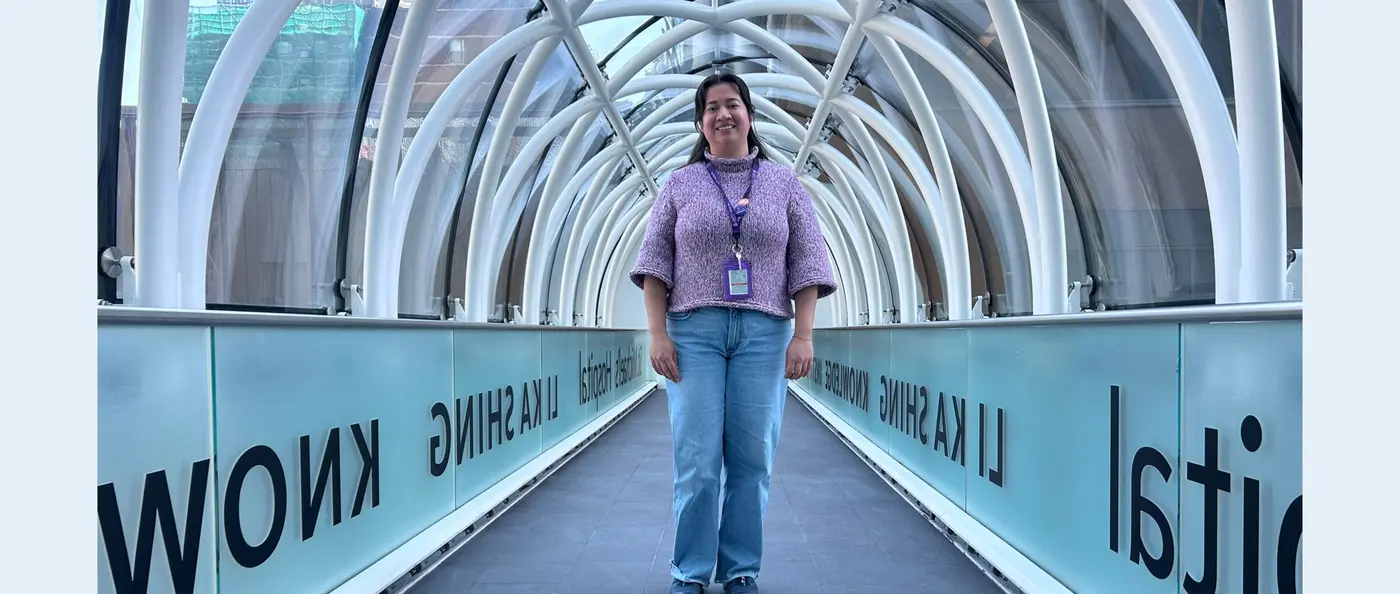
But what exactly is a Homelessness Outreach Counsellor? We spoke with St. Michael’s April Aleman about her remarkable and essential role, funded entirely by our donors.
How do you explain your position in the Navigator Program?
I’m a Homelessness Outreach Counsellor at St. Mike’s, so I work with patients admitted to the hospital who are experiencing homelessness. My role involves medical case management: supporting patients in their recovery by connecting them with primary care, accompanying them to specialist appointments, helping them access medication, and establishing long-term case management.
Do you work with patients in the hospital or in the community?
Both. I work intensively with patients when they’re in the hospital to understand their medical needs and goals. Maybe they need help obtaining ID, renewing their OHIP card and setting up income support, completing housing applications, and finding temporary shelter. Once they’re discharged, I continue working with them in the community for about three to six months.
How do you stay connected to people with no fixed addresses?
In our early conversations, I ask patients where they spend time, where they go for meals, and whether they attend any drop-ins. Most people have some community connection. They’ll say, “I go to Margaret’s for my meals” or “I go here to see the wound care nurse”. So, I’ll ask, “Is it OK if I’m looking for you? Can I call them? Can I go there?” Many patients visit the pharmacy for their daily medication, so I check there. The nearby pharmacies work well with our patients. They’ve always been helpful when I’m trying to find people.
We’re also lucky that we can give out cell phones. That makes a huge difference. And sometimes we lose people, and they end up back in the hospital, and we get reconnected that way.
You give out cell phones?
Yes, we have a flex fund built into the program budget, which is incredibly valuable. We give patients a phone so we can reach them, and doctors can follow up. We can give out Presto tickets and coordinate transportation to help patients attend medical appointments they wouldn’t otherwise be able to attend. Often, patients come to the hospital without having eaten, so I can use the flex fund to buy them a meal.
We also have access to the Odette Comfort Closet, which is for all St. Mike’s patients experiencing homelessness, so I can give someone clothes and shoes when they leave the hospital. If I know someone will be staying outside in the winter, I can give them a jacket and a sleeping bag.
Being able to support those individual needs on a case-by-case basis makes a really big difference.
Is this uncommon?
It is. Most community workers don’t have access to a flex fund, but it’s part of the program’s structure that makes it so special.
Are there other aspects of the Navigator program that are unique?
Lots. It’s unusual for patients to have someone in the hospital who can leave and meet them for an appointment. The physicians and social workers have huge caseloads that aren’t homeless-specific. Even if they wanted to, they can’t follow patients in the community.
I’ve also worked in the community where hospitals are seen as this fortress that no one can get through. As a community worker, trying to get hold of someone in a hospital is so challenging. In this role, I can be a liaison to keep patients connected to their community supports.
And then, because we’re in the hospital with our patients, we can often accomplish tasks quickly with them while they are recovering or receiving treatment in a stable environment. We can do their taxes and Ontario Works applications so they can access income supports. Or if a housing opportunity arises, we can quickly sort out their ID and handle all the necessary paperwork to secure housing.
Without us here in the hospital, I don’t know who would do that.
What drew you to this field?
I’ve thought about this a lot because patients often ask how I ended up here. I don’t have lived experience of being unhoused. My parents came to Canada as refugees with no other family or support, so the sense of taking care of each other and our community has always been important to me. I can’t really understand why we wouldn’t want to take care of people who aren’t doing well.
What does a typical day look like for you?
I usually start my days at the hospital and go through any new referrals. I’ll review new patient charts to see what’s going on: Do we know them from prior admissions? Have we followed them before? Are they going to be here for a day? For a few days?
I’ll meet the patient and see how they’re doing. I’ll check if there’s anything I can do to make them more comfortable—sometimes it’s just setting up the TV or getting them a doughnut from Tim Hortons.
I’ll explain my role and the kinds of support we provide, and see if it’s something they’re interested in. If so, we’ll work together to establish goals they want to work on.
I have hospital staff reaching out to me asking about a certain patient or how to navigate a particular scenario, so I’ll help with that.
I also accompany patients to medical appointments throughout the week. I recently went with a patient to the amputee clinic to get fitted for a prosthetic. We see a lot of patients who have had amputations because of frostbite, but getting a prosthetic is such a long process with so many appointments that it’s impossible for most of my patients. This is the first person I’ve worked with who made it to all the appointments, the amputee clinic, and will hopefully receive a prosthetic.
I often have past patients reach out when they need transportation to a distant appointment or are seeking a shelter bed. We do what we can.
What do you wish people knew about your role or the work you do?
The perception of people experiencing homelessness and people who use substances is so poor, and they really feel that judgment. We see patients who decline support or don’t want to engage with us because they’ve had so many bad experiences in the healthcare system.
I hear comments like “They can just go to rehab” or “This person doesn’t want to be housed,” and that isn’t my experience. They might need more support, but anyone and everyone would take housing. And I work with lots of people who would go into rehab tomorrow if it were readily available. But even if they do get in, what happens when they leave rehab? They’re back out on the street.
I feel like any one of us could have gone through similar traumatic experiences and ended up in this position. And still, these are some of the nicest people I’ve ever met.
I worked with a patient who had major surgery at St. Mike’s and then went to rehab at Providence. He had no income, so we helped him get an ID, applied for income support, filed his taxes, found him a family doctor, and arranged transportation. While attending a follow-up appointment at the hospital, he asked me to help him find the Foundation office. He had $100 in cash that he insisted on donating to St. Mike’s.
What keeps you going?
I work with so many people who genuinely care and want to make things better. It really feels like St. Mike’s is trying to provide better support and take better care of our patients who are experiencing homelessness. Everyone is working so hard.
And if we’re able to give someone a better experience than their last hospitalization, maybe they won’t wait until they’re as sick next time. Maybe they’ll come in earlier.
It feels like we’re making change.
The Navigator program is generously supported by Anonymous, Cadillac Fairview, Citi Foundation, Colin D. Irving, Family of Michael H. McCain, Meighen Family Foundation, Pass It Along Foundation, The P. & L. Odette Charitable Foundation, Primero-Patricio Family, The Schroeder Foundation, The Slaight Family Foundation, Staples Canada – Even the Odds Campaign, and TD Bank Group.
By Katie McMillan, St. Michael’s Hospital Foundation