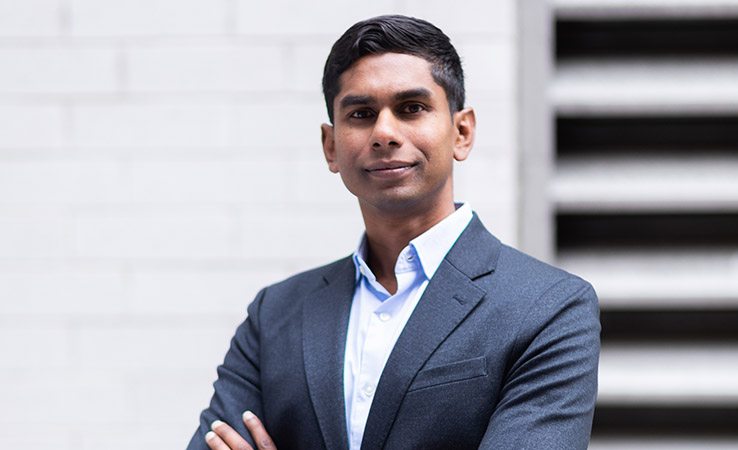
Dr. Sharmistha Mishra’s #OneBurningQuestion: What drives pandemics and why?

Lire cet article en français

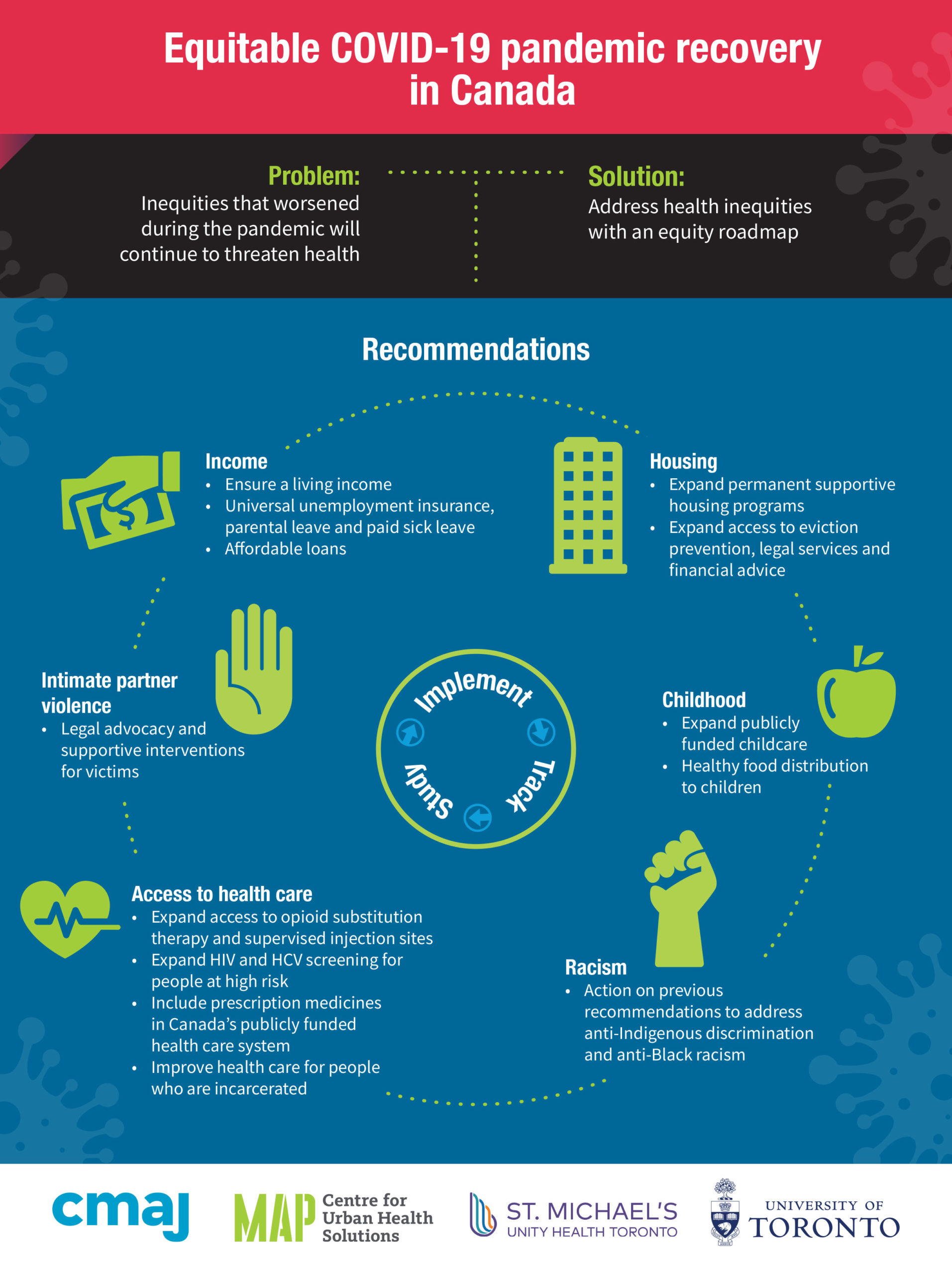
Dr. Sharmistha Mishra’s research has shown deep inequities in the spread of COVID-19 and the response to the virus. For her, it’s personal.

“You can see your uncles and aunties in the patients you look after, in the data that you’re working with,” she says. “With most of my family living in India and also affected, the underlying social and structural context of transmission was hard to miss.”

Dr. Mishra, a scientist at MAP Centre for Urban Health Solutions and an Infectious Diseases physician at St. Michael’s, works with her team to get at the “why” of the COVID-19 pandemic. Why is transmission more prominent in some neighbourhoods and networks? Why do some forms of essential work correlate with higher rates of COVID-19? Why have the impacts of the pandemic and the benefits of public health measures been inequitably distributed?

In three recent studies, one about COVID-19 cases and deaths among essential workers in Toronto; one about how variants of concern concentrated where previous variants had similarly clustered; and a third about increased cases of COVID-19 by socioeconomic factors and geography, Dr. Mishra and her colleagues tackle the role of social determinants of health in the pandemic and its response head-on.

To that end, the team has also developed methods to help generate more nuanced mathematical models. These models aim to capture the sources of similarity and of differences between transmission contexts and the extent to which a failure to address underlying context undermines the anticipated impact of a public health response.

Questions à un scientifique du MAP : Qu’est-ce qui est à l’origine des pandémies et quelles sont les raisons de leur apparition?

Les recherches de la Dre Sharmistha Mishra ont révélé de profondes inégalités dans la propagation de la COVID-19 et dans la réaction au virus. Pour elle, la question est personnelle.

« Vous reconnaissez vos oncles et vos tantes dans les patients dont vous vous occupez, dans les données avec lesquelles vous travaillez », dit-elle. « Comme la plupart des membres de ma famille vivent en Inde et sont également touchés, le contexte social et structurel sous-jacent de la transmission me semblait évident. »

Scientifique au Centre MAP pour des solutions de santé urbaine et médecin spécialiste des maladies infectieuses à l’hôpital St. Michael, la Dre Mishra travaille avec son équipe à comprendre le « pourquoi » de la pandémie de COVID-19. Pourquoi la transmission est-elle plus importante dans certains quartiers et au sein de certains réseaux? Pourquoi y a-t-il une corrélation entre certains types de travail essentiel et des taux plus élevés de COVID-19? Pour quelles raisons les impacts de la pandémie et les bienfaits résultant des mesures de santé publique sont-ils répartis de manière inéquitable? Selon trois études récentes (l’une portant sur les cas et les décès de COVID-19 parmi les travailleurs essentiels à Toronto, l’autre sur la manière dont des variants préoccupants se sont manifestés là où les variants précédents s’étaient regroupés de manière similaire, et la troisième concernant l’augmentation des cas de COVID-19 selon les facteurs socio-économiques et géographiques), la Dre Mishra et ses collègues abordent de front le rôle des déterminants sociaux de la santé dans le contexte de la pandémie et de ses conséquences.

It’s time to put down the phone and see your doctor in person, physicians say

From the Toronto Star article

Is it time to go back to the doctor’s office?

“If you have a chronic condition like high blood pressure or diabetes, it’s important to measure your blood pressure on an ongoing basis,” said Dr. Tara Kiran, an associate professor at the Temerty School of Medicine and a family doctor at St. Michael’s Hospital. “Even if you have your own machine at home, it’s really important to come and see your doctor every year so that we can make sure the readings are the same as the ones in the office.”

“In my own practice, I’ve found it helpful to see people in person if they have mental health concerns,” said Kiran. “Sometimes you can have a good therapeutic relationship over the phone or on video but part of the recovery process is building that relationship and connecting with people.”

She continued: “I think your doctor is more likely to be there, paying attention and connecting with you, if you’re in person, just the way all humans would be.”

‘There is a lot of fuel’ for COVID: Ontario vaccine data shows big lags in some areas, demographic groups

From the Toronto Star article

As Ontario slowly creeps toward the goal of having 90 per cent of the eligible population vaccinated against COVID-19, new data shows vaccine rates are stubbornly lagging in some neighbourhoods and among groups of people across the province.

For Dr. Stephen Hwang, a physician and research scientist at St. Michael’s Hospital and the MAP Centre for Urban Health Solutions, the low vaccine uptake among the homeless population points to a need for outreach beyond just the shelter system, such as visiting supervised drug injection sites.

Among Ontarians who have recently experienced homelessness, only 45 per cent between ages 12 and 64 are fully vaccinated, while 65 per cent over age 65 have had two shots.

“People experiencing homelessness are going to have multiple barriers to getting vaccinated,” Hwang said. They often don’t have internet access, for example, and can’t look up where to go for a shot.

They also may have some hesitation getting vaccinated due to distrust of the health-care system, government or authority figures.

“The other thing would be competing priorities, if someone is figuring out their basic survival needs, getting a vaccination may not be a high priority,” he added.

There are growing calls for drug decriminalization. Could it solve Canada’s opioid crisis?

From the Global News ariticle

Experts say decriminalization of drug possession can help tackle the overdose opioid crisis, but it’s not enough and additional measures are needed.

Daniel Werb, director of the Center on Drug Policy Evaluation at St. Michael’s Hospital in Toronto, said Canada’s highest priority should be to regulate its drug market.

“Decriminalization is not going to directly influence overdose mortality,” he said. “The way to directly reduce overdose mortality is by regulating the drug supply.”

Policing practices and threshold limits are other issues to consider to ensure inequities are not amplified by drug policies, said Werb.

“It’s about maximizing the benefits of this policy change by making sure that there aren’t other factors or other policing patterns that come into play that essentially make it the status quo for some people who use drugs,” he said.

Increase in minimum wage good, but not good enough, experts say

CBC RADIO ONTARIO TODAY

As of Jan. 1, the $14.35-an-hour minimum wage will jump to $15. Dr. Shazeen Suleman, pediatrician at St. Michael’s Hospital and member of the Decent Work and Health Network, joins CBC Radio Ontario Today and explains the link between health and basic income, and what the increase means for “the one in five children in Ontario living in poverty.”

Interview with Dr. Shazeen Suleman at 34:30

I’m Ready HIV self-testing research program releases its first data summary

Data from June through August 2021 shows promising uptake of the program among key populations and includes 3 positive test results

The I’m Ready research program’s first-ever data summary, for the program’s first quarter, is now available .

Launched in June 2021, I’m Ready invites people to download its I’m Ready, Test app to join the program, after which they can order up to three free HIV self-test kits for delivery or to be picked up at over 80 participating locations across Canada . Critically, participants are also supported to connect to care and prevention, either on their own using this website’s Care pathways , or by booking an appointment with the program’s peer navigators for support before, during or after they self-test for HIV.

The first-quarter data summary , which captures participant data from June through August 2021, highlights the following key findings:

● 14,000+ website visitors;
● 1,579 people consented and entered the study through the I’m Ready, Test app;
● 1,311 participants started the pre-test survey;
● 1,100 participants ordered 2,653 HIV self-test kits for delivery or pick up;
● 496 participants added at least one test result in the app; and
● 3 positive test results submitted, all from key populations.

Noted Dr. Sean B. Rourke, I’m Ready’s Principal Investigator, Director of REACH Nexus and Scientist with MAP Centre for Urban Health Solutions, “Collecting data in real-time is critical to understanding what is and isn’t working so we can continue to improve our program and make a difference—particularly for key populations who are most affected by health inequities.”

Home is in your heart and mind: How has the pandemic impacted youth experiencing homelessness?

From the Canadian Institutes of Health Research

Mardi Daley is an advocate, entrepreneur and Peer Specialist who recently founded Lived Experience Lab to support ethical engagement of people with lived experience in community-based research and workforce development. Mardi brings 6 years of experience working across youth-serving agencies in and outside of Toronto with a special focus on youth homelessness and mental health.

Naomi Thulien is a nurse practitioner and researcher dedicated to tackling the social and structural inequities that cause and perpetuate youth homelessness. She is a staff scientist at the MAP Centre for Urban Health Solutions – a research institute at St. Michael’s Hospital in Toronto. Naomi is also an Assistant Professor (Status-Only) at the Dalla Lana School of Public Health at the University of Toronto.

Two members of the youth advisory council for the CIHR Institute of Human Development, Child and Youth Health interviewed Mardi Daley and Naomi Thulien, investigators on the COVID-19 Mental Health Knowledge Synthesis project, Pandemic-Proof: Synthesizing Real-World Knowledge of Promising Mental Health and Substance Use Practices for Young People Who Are Experiencing or Have Experienced Homelessness.

Interview

What is homelessness, and what does it mean to be home?

Naomi offers a holistic perspective of what it means to be home: “Our Indigenous colleagues understand this the best – to be ‘housed’ is different than to be ‘home.’ And to be home is not four walls and a roof, it’s something in your heart and in your mind”. Homelessness is also not a linear experience. “There is a mentality and psychological impact associated with living in survival mode for so long. Feeling homeless in your own home is a real threat,” explains Mardi. We need to look at upstream factors we can improve as well as long term solutions we can implement, looking beyond shelters and towards long term housing and employment outcomes. Tangible solutions such as rent subsidies and post-housing wrap-around supports have been successful; however, intangible solutions focused on fostering inclusion, belonging, and sense of purpose are just as important. “Youth facing homelessness experience a different type of boredom – an existential crisis of meaning and belonging. And when transitioning out of homelessness, there is a spike in this existential crisis of boredom, exacerbated by feelings of loneliness and isolation,” says Naomi.

Dr. Gillian Booth elected as a Fellow with the Canadian Academy of Health Sciences

From the Canadian Academy of Health Sciences

Dr. Gillian Booth has been elected as a Fellow this year with the Canadian Academy of Health Sciences (CAHS). With this list of individuals, CAHS is proud to recognize excellence in health sciences and these new Fellows reflect a rich and varied expertise.

Dr. Booth is a practicing endocrinologist and Tier 1 Canada Research Chair in Policy Solutions for Diabetes Prevention and Management. She investigates the socioeconomic, environmental and health-care factors behind Canada’s diabetes epidemic.

Election to Fellowship in the Academy is considered one of the highest honours for individuals in the Canadian health sciences community and carries with it a covenant to serve the Academy and the future well-being of the health sciences irrespective of the Fellow’s specific discipline.

“Becoming a member of the Canadian Academy of Health Sciences recognizes Fellows’ dedication to health sciences,” says Dr. Chris Simpson, President, CAHS. “We are proud of their accomplishments and we are honoured to welcome them to the Canadian Academy of Heath Sciences.”

Researcher says Halifax modular units require social supports for residents

From the Global News Article:

“From a public health perspective, and from a health care perspective, and from a well-being, and caring about humans perspective — there are no benefits to what has happened, there are only downsides,” Jesse Jenkinson said, a public health researcher with the MAP Centre for Urban Health Solutions in Toronto.

Jenkinson’s research focuses on the widening gaps in health and social services for people who experience houselessness.

She says the increasing number of forcible, police-led evictions of people sleeping rough in encampments across Canada highlights the need for governments to start investing in supportive housing.

“What we really need to do is just create spaces that people can move into. Encampments exist because there’s nowhere else for people to go,” she said.

Jenkinson says residents who move into social housing settings, like modular units, need a wide range of social supports in order to help them stabilize their lives.

 “Case manager supports, harm reduction supports, mental health supports, these are all really necessary social services to help keep people housed and keep their well-being supported. Without these supports, people can fall back into homelessness,” she said.