
Build back better: Every Canadian should have a family doctor

Lire cet article en français

THE TORONTO STAR

By Dr. Tara Kiran with contributor Dr. Danielle Martin

Imagine moving to a new city and automatically joining a local health-care team, just like children join their neighbourhood school. What if every Canadian had access to a social worker or pharmacist through a family practice team and could easily reach them via phone, video call or email?

The health of Canadians depends on easy and equitable access to high-quality primary care that is integrated with other parts of the health-care system. The need has never been more urgent.

During the pandemic, most doctor’s offices were open, but many Pap tests, diabetes visits and routine immunizations were delayed as patients understandably waited for lower case counts and vaccines. We now face a backlog of missed chronic disease and preventive care.

Additionally, more Canadians are facing mental health and addiction challenges that need primary care attention.

Reconstruire en mieux : Tous les Canadiens devraient avoir un médecin de famille

Par la Dre Tara Kiran, avec la collaboration de la Dre Danielle Martin

Imaginez déménager dans une nouvelle ville et intégrer automatiquement une équipe de soins de santé locale, tout comme les enfants intègrent l’école de leur quartier. Et si chaque Canadien avait accès à un travailleur social ou à un pharmacien par l’intermédiaire d’une équipe de médecine familiale et pouvait facilement les joindre par téléphone, appel vidéo ou courriel?

La santé de la population canadienne repose sur un accès facile et équitable à des soins primaires de haute qualité, intégrés aux autres volets du système de soins de santé. Le besoin n’a jamais été aussi pressant.

Durant la pandémie, la plupart des cliniques médicales sont demeurées ouvertes, mais de nombreux tests de routine comme le dépistage du cancer du col de l’utérus, les suivis pour la gestion du diabète et pour la vaccination ont été retardés, parce que les patients attendaient, à juste titre, que le nombre de cas diminue et que les vaccins soient administrés. Nous faisons maintenant face à un retard considérable dans le traitement des maladies chroniques et des soins préventifs. En outre, de plus en plus de Canadiens sont aux prises avec des problèmes de santé mentale et de toxicomanie qui nécessitent le recours aux soins primaires.

How to tackle homelessness in Ontario: Interview with Dr. Stephen Hwang

Lire cet article en français

TVO.org speaks with MAP Director Dr. Stephen Hwang about hidden homelessness, encampments, our Beyond Housing network — and making sure people get the supports they need.

From the TVO.org piece:

Hwang: “We’ve made progress. Things have changed dramatically over the course of the pandemic. And we’re now at a tipping point, because we’re in a new situation that can’t just be sustained as the new status quo. We’re going to either go forward and solve some of these problems permanently or we’re going to just go back to the way things were, and it’ll be even worse than it was before. I think it’s really impossible to imagine that we will go back. Before, we could imagine that homelessness would just kind of grumble along the same way it always had, and nothing would change, except around the edges. Now I think that things have changed, and the system has been destabilized in a way that means we will either make substantial progress toward addressing the problem or things will get even worse. That’s my take on it.”

Read This Article

Comment s’attaquer au problème de l’itinérance en Ontario : Entrevue avec le docteur Stephen Hwang

TVO.org s’entretient avec le directeur du MAP, le docteur Stephen Hwang, au sujet de l’itinérance cachée, des campements, de notre réseau Beyond Housing – et de la nécessité de veiller à ce que les gens obtiennent le soutien dont ils ont besoin.

Tiré de l’article de TVO.org :

Hwang : « Nous avons réalisé des progrès. La situation a radicalement changé au cours de la pandémie. Nous nous trouvons maintenant à un point de non-retour, car nous vivons une nouvelle réalité qui ne peut pas être considérée comme le nouveau statu quo. Soit nous allons de l’avant et nous résolvons certains de ces problèmes de façon permanente, soit nous revenons à la situation antérieure, ce qui serait encore pire. Je crois qu’il est tout à fait impensable de retourner en arrière. Auparavant, nous pouvions imaginer que le phénomène de l’itinérance continuerait d’exister comme naguère et que rien ne changerait, du moins en apparence. Maintenant, je pense que la situation a évolué et que le système a été déstabilisé d’une manière telle que soit nous ferons des progrès substantiels pour résoudre le problème, soit la situation continuera de se détériorer. C’est ainsi que je vois les choses. »

Lire cet article en français

Toxic drug crisis, pandemic have left front-line workers struggling to cope

THE GLOBE AND MAIL

Zoe Dodd had just given an emotional presentation to Toronto’s Board of Health when she realized that something wasn’t right. It was mid-November, the COVID-19 pandemic had exacerbated Canada’s runaway toxic drug crisis, and the long-time harm-reduction worker was in tears as she spoke about front-line workers responding to thousands of overdoses and finding bodies in portable toilets and doorways.

“The ripple of death is grim, and it will take decades for people impacted by this loss to heal,” Ms. Dodd told the board. “We are abandoned by all levels of government, who point fingers at one another, and we are burning out.”

A couple of days later, she awoke feeling foggy-headed and disassociated from reality. Her heart raced and the room seemed to vibrate. She felt like she was in another dimension.

Advocates say safe drug supply needed to combat spike in opioid overdose deaths in Canada

From the Global News article:

Dan Werb, executive director of the Centre on Drug Policy Evaluation and scientist at St. Michael’s Hospital in Toronto, said the unregulated drug supply in the illegal market has been getting increasingly more potent and toxic for decades, but the pandemic has made things even worse.

“There were border restrictions and restrictions on movements that affected international drug trafficking and national drug trafficking across Canada,” Werb told Global News. “Every industry has been affected by COVID, and illegal drugs are no different.”

He said deadly amounts of fentanyl, carfentanyl, and even etodesnitazene — a high-potency synthetic opioid — are being found on the streets.“These drugs that are showing up in the drug market are new, but the trends that have led us to seem increasingly potent and toxic chemicals show up in these drug markets [are] not new. This is old. It’s the result of trying to criminalize our way out of the overdose epidemic. And it’s just simply not working.”

Potent opioids showing up in Toronto’s drug supply for 1st time as overdose deaths mount

CBC NEWS

Several forms of extremely potent synthetic opioids are being found in random samples of Toronto’s street drug supply, which experts say is indicative of increased risk for people in a city grappling with an overdose crisis.

“What’s very dangerous for people who use drugs is just that the supply is getting stronger, and it’s also just completely unpredictable — and what people are buying isn’t necessarily what they’re getting,” said Karen McDonald, the lead for Toronto’s drug checking service, which operates out of St. Michael’s hospital.

“It’s definitely alarming to us.”

New ‘ultra potent’ opioids hitting Toronto streets in recent weeks as overdose deaths mount

From the Toronto Star article:

…The opioids were identified by the Centre on Drug Policy Evaluation (CDPE), a Toronto-based research agency that collects and tests small samples of street drugs collected from users and dealers. The ultra-potent opioids were primarily found in samples that were thought to be straight fentanyl.

An analysis of newly obtained data on opioid overdoses across the country — including numbers from provincial coroners, street drug tests in Ontario and B.C., and a previously unpublished national drug user survey — reveals a national crisis spiking into uncharted territory during the pandemic.

Toronto saw an 81 per cent jump in opioid-related deaths between 2019 and late 2020.

Border closures and drug supply chain disruptions are blamed by researchers for creating a cocktail of new drugs and compounds.

“Any time you disrupt drug trafficking routes, unexpected things will happen,” said Daniel Werb, the executive director of the CDPE and a research scientist at St. Michael’s Hospital. “That’s why you see increasingly potent opioids on the market because the higher the potency, the more efficient the package is, the easier it is to traffic.”

Islanders can access rapid HIV self-tests anonymously through national program

CBC NEWS

A new HIV self-testing and research program could ensure more Islanders get a diagnosis and the followup support they need.

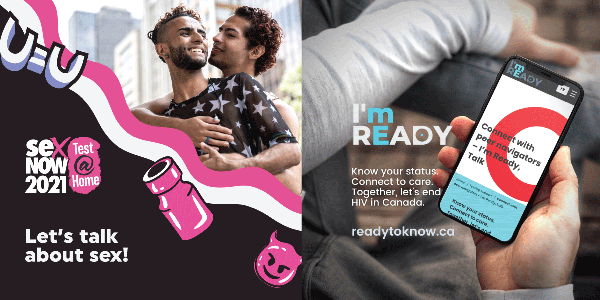
The I’m Ready program is national in scope and was launched this month by Reach Nexus, a research group. Canadians can order HIV test kits online through a mobile app and get them delivered to their home, or to a local pick-up spot. PEERS Alliance, a sexual health centre in Charlottetown, is a pick-up location on P.E.I. for the program.

“We estimate that there’s over 8,000 people that are living with HIV in Canada and don’t know it,” said Dr. Sean Rourke, a clinical neuropsychologist and a scientist at the MAP Centre for Urban Health Solutions at St. Michael’s Hospital in Toronto, which is involved in the program. 

They were afraid of getting the COVID-19 vaccine. How a talk with the family doctor changed their minds

THE TORONTO STAR

Dr. Tara Kiran knew she was close. The family physician had spent weeks trying to convince her patients, a mom and daughter who lived and worked in a COVID-19 hot spot in Toronto, to get vaccinated. Months had passed since they became eligible for their shots. Now they were in her office together for an appointment and it seemed like they might finally be ready.

The patients, Esther, 66, and her daughter Alice, 39, trusted Kiran. She had been their family doctor for nearly a decade. She knew their health histories, their families, what they did for a living, what kept them up at night. If they decided to get the vaccine, there was only one person they wanted holding the syringe.

“I’m not getting it unless I can get it from Dr. Kiran,” Alice told her husband before the appointment.

There was only one problem. Kiran didn’t have any vaccine to give.

That day in June, Esther and Alice sat in Kiran’s office, a small room with green walls, an examination bed, three pieces of art hung slightly askew and two chairs alongside the doctor’s desk from which the patients asked a question she heard often: Can we get the vaccine here, in the clinic, from you?

Improving HIV testing and care in Canada: I’m Ready and Sex Now – Test@Home

Interview with MAP scientist Dr. Sean B. Rourke and Prof. Nathan Lachowsky of CBRC on the CATIE Blog

HIV self-testing was approved in Canada in November 2020, largely thanks to research conducted by REACH Nexus, part of Unity Health Toronto’s MAP Centre for Urban Health Solutions. But approval does not mean access – the next step is getting self-tests into the hands of people who don’t know they have HIV, and linking them to follow-up treatment and care.

REACH and the Community-Based Research Centre are working on two initiatives that will help do just that: REACH’s I’m Ready HIV self-testing research program (complete with the I’m Ready, Talk peer telehealth service, on which REACH partners with the CBRC) and the REACH-funded Test@Home component of the 2021 edition of CBRC’s Sex Now survey.

To learn more about these initiatives, CATIE spoke with Prof. Nathan Lachowsky of CBRC and Dr. Sean B. Rourke of REACH.

Access to HIV self-testing kits expanded in York Region by CAYR and I’m Ready

TORONTO STAR

As the global pandemic continues, a global epidemic rages on and is often undiagnosed: HIV.

This month, however, CAYR Community Connections and the I’m Ready research program, an initiative of the REACH Nexus research group, part of MAP Centre for Urban Health Solutions, St. Michael’s Hospital, have partnered to break down the stigma surrounding the virus and increase access to free self-testing kits across York Region.

The aim of the St. Michael’s pilot is to reach the undiagnosed with a goal of ending the epidemic in Canada, distributing 50,000 kits across Canada so people know their status and, if needed, are connected to care that can save lives.