
Director’s update: MAP’s 2025 in review

Pictured above, from left to right: MAP Director Dr. Stephen Hwang and MAP scientist Dr. Tara Kiran at the 2025 MAP Solutions for Healthy Cities Symposium, in discussion with Dr. Andrea Tricco (Executive Director Li Ka Shing Knowledge Institute), Stephen Lucas (former Deputy Minister of Health Canada) and Dr. Fahad Razak (Li Ka Shing Scientist).

Message from MAP Director Dr. Stephen Hwang

With 2026 on the horizon, I’m incredibly proud to share some of MAP’s successes from the past 12 months. Some highlights (click here to jump to the full report):

  • In Ontario, a new Primary Care Act mirrors MAP’s OurCare Standard, setting ambitious, patient‑centred goals for the province’s health system.
  • Nationally, Canada’s first National School Food Program was made permanent in 2025, providing meals to 400,000 children and saving families hundreds of dollars annually.
  • Thanks to recent Our Healthbox launches in the Northwest Territories, MAP’s programmatic reach now officially stretches from coast to coast to coast.
  • MAP was spotlighted in more than 100 media features and published more than 250 peer-reviewed papers, leading and defining the conversation on what a healthier Canada can look like.

Through each of the stories above and below, I see MAP’s core values in action: world-class research to strengthen Canada’s policies and practices; community partnerships to bring evidence-based health innovations to the places they’re needed most; and a deep commitment to put equity and respect for lived expertise at the centre of everything we do.

These stories also underscore the importance of persistence. Many of this year’s wins were years in the making.

On behalf of MAP’s leadership, researchers, staff and students: thank you to MAP’s many community, academic and policy partners and to MAP’s visionary donors and funders.

Step by step, we are charting the course toward a healthier, safer and more inclusive Canada. Our successes are only thanks to your partnership and commitment. We are grateful to do this work with you.

Sincerely,

Dr. Stephen Hwang

Director, MAP Centre for Urban Health Solutions

Canada Research Chair in Homelessness, Housing and Health

2025 Research Highlights

Canada’s first National School Food Program: Permanent federal funding, local implementation: In 2024, MAP’s Dr. Katerina Maximova helped develop Canada’s first-ever National School Food Program. In 2025, Prime Minister Carney announced that the federal government is making the national program permanent. At the local level this year, Dr. Maximova served on Toronto’s Universal Student Food Program Steering Committee which developed the city’s vision and strategy for universal school meals. City Council unanimously adopted the plan in June. The city will now provide a morning meal in all Toronto school communities by the 2026/27 school year and introduce a lunch program by 2030.


Historic primary care act based on MAP recommendations: In June, the Ontario government introduced the Primary Care Act, a framework of six ambitious, patient-centred objectives for Ontario’s primary care system. The framework is an almost word-for-word reflection of MAP’s OurCare Standard. Watch here as OurCare lead Dr. Tara Kiran reflects on what this means for patients. Dr. Kiran just wrapped up a second phase of the OurCare study (learn more: The Globe and Mail, Toronto Star) and continues to champion implementation of the OurCare Standard nationwide.


MAP reaches the far north, distributes lifesaving supplies across Canada: Since MAP’s first Our Healthbox smart vending machines launched in 2022, MAP has now distributed almost 2,000 free HIV self-tests, more than 37,000 harm reduction supplies and almost 4,000 Naloxone kits — reaching 15,700 people in 22 communities across Canada. In 2025, the program continued to expand with new Healthboxes in New Brunswick (Miramichi), Ontario (Toronto, North Bay), Manitoba (Winnipeg), Alberta (Piikani Nation) and the Northwest Territories (Behchokǫ̀, Hay River, Inuvik and Yellowknife).


MAP drug checking initiative receives $3M of new federal funding, protects thousands across Ontario: In 2023, MAP received $2M of federal funding to create Ontario’s Drug Checking Community, an expansion of MAP’s public health and safety program, Toronto’s Drug Checking Service. This October, Health Canada committed an additional $3M to the program with the goal of establishing a collection site in each of Ontario’s 29 public health unit jurisdictions by December 2027. The service prevents overdose and saves lives every day by rapidly analyzing tiny drug samples to detect and describe unexpected — and often lethal — ingredients. Results not only inform people who use drugs, but also equip community health workers, public health units, first responders, policy makers and others with vital intelligence about what’s circulating in the unregulated drug supply. Since Toronto’s Drug Checking Service launched in 2019, the program has now checked more than 20,000 samples of drugs and used drug equipment.


MAP’s national partnership with Staples Canada reaches 5-year milestone: Launched in early 2021, Even the Odds is a partnership between Staples and MAP to raise awareness of inequity in Canada and to help create vibrant, healthy communities. Through corporate donations and fundraising, Even the Odds funds MAP research and innovative, evidence-based solutions across Canada — to help make the future fair for everyone. Originally struck as a five-year, $5M commitment, we are thrilled to share that the initiative has now raised more than $8M and will continue through a new, multi-year agreement. MAP is incredibly grateful for Staples’ unwavering vision, commitment and transformative support.


First phase of pharmacare comes to life in BC, Manitoba, PEI and the Yukon: In 2024, Canada passed a new pharmacare law that was strongly influenced by MAP research. In 2025 BC, Manitoba, PEI and the Yukon were the first jurisdictions to sign federal Pharmacare agreements, and will now provide residents with free coverage for contraceptives and some diabetes medications. In November, a federal committee chaired by MAP’s Dr. Nav Persaud published its recommendations for launching and paying for a fully single-payer pharmacare program across the country.


MAP’s Navigator program opens third site in Montreal, reaches 1,000 patients: MAP’s signature Navigator Program pairs hospital patients who are homeless with an outreach counsellor — a ‘Navigator.’ The Navigator gets to know the patient and connects them with the health and social support they need to break cycles of homelessness and poor health, and to move forward in securing housing that works for them. Thanks to Even the Odds (Staples Canada), MAP expanded the program to St. Paul’s Hospital (Vancouver) in 2023 as well as Centre hospitalier de l’Université de Montréal (CHUM) in 2025. This summer, Navigator reached a major milestone: the national program served its 1,000th patient (learn more: CTV Your Morning, CBC).


A new standard for violence prevention and survivor-centred care: The first program of its kind in Canada, MAP’s Safe at Home program has now empowered 52 women and gender-diverse people to end violent situations at home — without facing displacement. Delivered in partnership with Mission Services of Hamilton, this innovative model requires the perpetrator of violence to leave the family home. Survivors and their children have the option to safely remain in place, protected by Safe at Home’s integrated supports from health, social, police and legal services. MAP is now building new partnerships to expand the program and help more people to access safety, stability and support where they live.


MAP initiative identifies hundreds of undiagnosed HIV and syphilis infections, connects to culturally safe care: In March, MAP launched the Ayaangwaamiziwin Centre — a groundbreaking public health response to the alarming rise in HIV and syphilis rates in the Prairies and northern territories. The Centre has already reached and tested more than 2,000 people across Alberta, Saskatchewan and Manitoba, identifying more than 200 previously undiagnosed cases of HIV and syphilis and connecting patients to culturally safe treatment and preventative care. Named after the Ojibwe word for ‘carefulness and preparedness,’ the Ayaangwaamiziwin Centre will soon expand to new sites in the Northwest Territories, Yukon and Nunavut.


MAP rewrites Canadian clinical guidelines for HIV prevention medication: MAP scientist Dr. Darrell Tan led a major update to Canada’s HIV prevention medication guidelines, published in December in the Canadian Medical Association Journal. The new guidelines centre equity and access, and offer Canadian healthcare providers and policy makers the latest insights on how to ensure lifesaving HIV medications are effectively prescribed. A key change: providers are now advised to prescribe PrEP to anyone who requests it — even if patients choose not to disclose HIV risk factors. This shift in practice would remove barriers created by clinician ‘gatekeeping’ and recognizes the realities of stigma and discrimination. Marginalized communities continue to face disproportionately higher barriers to HIV prevention and care.


MAP hosts 2025 Solutions for Healthy Cities Symposium: On November 25, almost 200 researchers, service providers, policymakers, students and community experts gathered at St. Michael’s Hospital in Toronto to explore and discuss a multifaceted challenge: how to advance evidence-driven and equity-focused system change in Canada. The 2025 Solutions for Healthy Cities Symposium comprised a full day of talks, discussion and Q&As with policy-focused researchers and insightful guest speakers — including keynote André Picard, one of Canada’s top health and public policy observers and commentators.


MAP x APPLE Schools: Healthier futures for 4,500 more kids in 2025: APPLE Schools is an internationally recognized best practice that has been proven to help kids move more, eat better and feel happier – erasing many of the long-term health effects of childhood poverty. MAP’s implementation and evaluation of the award-winning program continues in 17 elementary schools in disadvantaged Ontario and Alberta neighbourhoods, with plans to expand to reach more students in 2026. What does it look like to be an APPLE School? Here’s an adorable moment with a grade one student, and an example of an APPLE Schools activity that builds movement into the school day.


Primary Focus reaches Top 5 in Apple’s Medicine podcasts, wins international award: Launched in February, MAP scientist Dr. Tara Kiran’s Primary Focus podcast has already gained an active audience in 22 countries, won an eHealthcare Leadership Award and reached the Top 5 in Apple’s Medicine podcast charts. It’s also a finalist for the Canadian Online Publishing Awards in the Best Podcast category. Now in its second season, the podcast brings together the voices of frontline healthcare workers, patients, researchers and policymakers to unpack the issues and innovations that could — and should — transform primary care in Canada.


MAP’s awards and recognition continue to grow: Two out of the three prestigious CIHR Institute of Population and Public Health Trailblazer Awards were awarded to MAP scientists in 2025, recognizing their exceptional contributions to public health research. MAP is also now home to seven Canadian Academy of Health Sciences (CAHS) Fellows (+1 in 2025) and three Government of Canada King Charles III Coronation Medal award winners (+2 in 2025). This year, MAP researchers were awarded the inaugural Royal Society of Canada Eric Jackman Prize, a 2025 Vanier Canada Doctoral Award (Canadian Institutes of Health Research) and two PSI Graham Farquharson Knowledge Translation Fellowships. From the University of Toronto, MAP researchers won the 2025 Peggy Leatt Knowledge & Impact Award (Institute of Health Policy, Management and Evaluation), Louise Lemieux-Charles Health System Leadership Award (Institute of Health Policy, Management and Evaluation), 2025 Doctoral Award (Emerging and Pandemic Infections Consortium/EPIC), Excellence in Research: Mid Career Researcher Award (Department of Family and Community Medicine), Faculty Recognition Award for Exceptional Mentorship — (Institute of Medical Science) and the Dean’s Alumni Award (Temerty Faculty of Medicine). Finally, a MAP collaboration with The Local Magazine won the Jackman Award for Excellence in Journalism at the 2025 Canadian Journalism Foundation Awards.


Want more research updates?

Follow us on LinkedIn and subscribe to MAP’s Junction e-newsletter for short, monthly updates on our studies, our solutions and the issues we study.


MAP hosts 2025 Solutions for Healthy Cities Symposium

On November 25, 2025, almost 200 researchers, service providers, policymakers, students and community experts gathered at St. Michael’s Hospital in Toronto to explore and discuss a multifaceted challenge: how to advance evidence-driven and equity-focused system change in Canada.

The symposium comprised a full day of talks, discussion and Q&As with policy-focused researchers and insightful guest speakers. This was the third Solutions for Healthy Cities Symposium hosted by MAP, and the first that MAP co-hosted with the St. Michael’s Hospital Urban and Community Health Research Pillar.

About the 2025 Symposium

For many public health and population health researchers, the ultimate goal is to enable system change—to improve health and well-being, and to empower everyone to live with dignity. We believe that Canada’s health and social policies should be grounded in the best possible evidence, and we want to help make that happen.


In practice, what can that process look like? At a time when science itself is politicized, what are the roles researchers can play in enabling and advancing evidence-based and equity-focused policymaking and policy implementation in Canada?

Participants joined us to explore these questions, hear from insightful guest speakers and discuss how researchers and policymakers can be more successful in advancing equity-focused system change.

Keynote: Andre Picard

André Picard is one of Canada’s top health and public policy observers and commentators. He is the health columnist at The Globe and Mail, where he has been a staff writer for more than 30 years. He is also the author of numerous books and has received much acclaim for his writing and for his dedication to improving healthcare, including earning him the National Newspaper Award as Canada’s top newspaper columnist.

Speakers

Panels explored the different roles that research and researchers can play in advancing evidence-based and equity-focused system change: ‘the advocate,’ ‘the community collaborator’ and ‘the policy partner.’

Panel 1: ‘The Advocate’

Najma Ahmed is a trauma surgeon, Interim Executive Vice President and Chief Medical Officer at Unity Health Toronto. In 2019 she formed Canadian Doctors for Protection from Guns to address gun violence as a public health issue, and played a key role in advancing Canada’s 2020 assault weapons ban. The group now has nearly a thousand members across the country. Read more

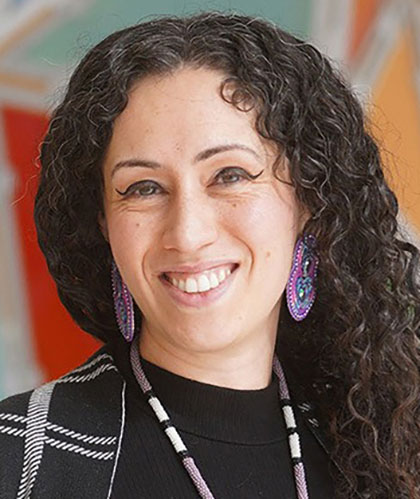
Mikaela Gabriel is a clinical and counselling psychologist, Canada Research Chair in Indigenous Women and Two-Spirit Mental Health and Homelessness and a scientist at both MAP Centre for Urban Health Solutions and Well Living House. Her research explores Indigenous health and wellbeing, urban cultural connection and housing transitions for Indigenous Peoples in Canada. Read more

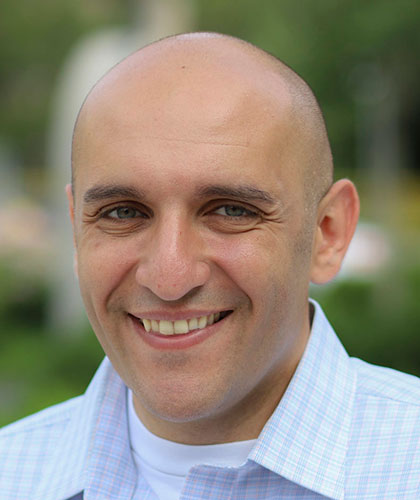
Mina Tadrous is an ICES scientist, Canada Research Chair in Pharmaceutical Policy and Real-world Evidence and co-director of Pharmaceutical Policy and Pharmacy Practice at the Ontario Drug Policy Research Network. His research focuses on evaluating drug policies and working closely with policymakers on drug safety and effectiveness. Read more

Nav Persaud is a family doctor, Canada Research Chair in Health Justice, scientist at MAP Centre for Urban Health Solutions and chair of the the Government of Canada’s Committee of Experts to make recommendations on National Pharmacare. Dr. Persaud’s research is dedicated to narrowing the health gap between the highest and lowest wealth brackets, and to ensuring that everyone in Canada can afford the food and medication that they need. Read more

Seema Marwaha (moderator) is the Editor-in-Chief of Healthy Debate (healthydebate.ca), where she brings years of experience in journalism, advocacy and health communication. She is also an internal medicine physician at St. Michael’s Hospital and an investigator with the St. Michael’s Hospital Urban and Community Health Pillar. She is the current president elect of the Federation of Medical Women of Canada and a regular contributor to various Canadian media publications. Read more

Panel 2: ‘The Community Collaborator’

Sacha Bragg is an Opioid Research Communication and Project Liaison with Chiefs of Ontario. She has also been a researcher with the Thunderbird Partnership Foundation, championing culturally-based addictions, substance use and mental wellness services for First Nations in Canada. Learn more

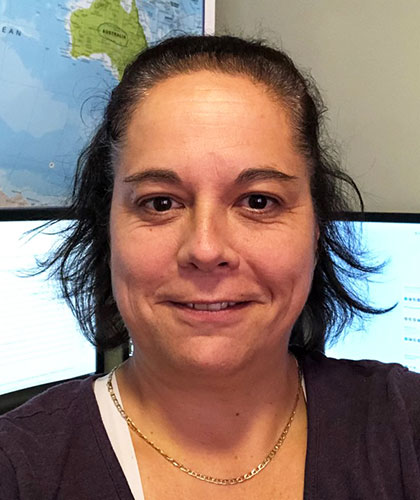
Diana Chan McNally is a community and crisis worker in Toronto’s downtown east side, founder and coordinator of the Ontario Coalition for the Rights of Homeless People, and an instructor in George Brown College’s Community Worker program. As someone with lived experience of social services and of being unhoused, Diana’s work focuses on human rights and equity issues for people who are experiencing homelessness by advocating at the political level, while still maintaining an active frontline praxis. Read more

Zoë Dodd is MAP’s inaugural Community Scholar. She has worked in harm reduction for almost 20 years as a program coordinator, organizer and advocate. She helped develop a model of treatment and support for people who use substances living with Hep C, which has been adopted in several areas across Ontario. Read more

Mohammad Karamouzian is an infectious disease epidemiologist and scientist with the Centre on Drug Policy Evaluation, based at MAP Centre for Urban Health Solutions. He is also affiliated with the BC Centre on Substance Use and the WHO Collaborating Centre for HIV Surveillance in the Middle East and North Africa. His research focuses on addressing health inequities faced by marginalized populations such as female sex workers, people who inject drugs and those who are incarcerated, and on translating his findings into policy. Learn more

Tara Gomes (moderator) is a professor at the University of Toronto, Canada Research Chair in Drug Policy Research and Substance Use, Scientific Director of the St. Michael’s Urban and Community Health Research Pillar, scientist at MAP Centre for Urban Health Solutions and the principal investigator of the Ontario Drug Policy Research Network. Through her research, she is working to develop evidence, tools and best practices to strengthen drug policy decision-making in Canada and around the world. Read more

Panel 3: ‘The Policy Partner’

Stephen Hwang is an internal medicine physician, Canada Research Chair in Homelessness, Housing and Health and director of MAP Centre for Urban Health Solutions. His success co-leading the At Home/Chez Soi study persuaded the federal government to commit to scaling up Housing First interventions across Canada. Read more

Tara Kiran is a family doctor, scientist at MAP Centre for Urban Health Solutions and the Fidani Chair in Improvement and Innovation at the University of Toronto. Her OurCare study was Canada’s largest-ever public engagement on primary care reform, and provided the blueprint for Ontario’s 2025 Primary Care Act. Read more

Stephen Lucas is the CEO of Mitacs, science policy advisor to Unity Health Toronto and former Deputy Minister of Health Canada. He brings four decades of public sector experience in economic, innovation, energy, environment, health and social policy development. Read more

Fahad Razak is an internal medicine physician, Canada Research Chair in Healthcare Data and Analytics and a scientist with the St. Michael’s Urban and Community Health Research Pillar. He served as the Scientific Director of the Ontario COVID-19 Science Advisory Table, shaping the province’s pandemic response. Read more

Andrea Tricco (moderator) is the Executive Director of the Li Ka Shing Knowledge Institute at St. Michael’s Hospital and a scientist in the Knowledge Translation Program. She is a professor in the Dalla Lana School of Public Health, University of Toronto and holds a Tier 1 Canada Research Chair in Knowledge Synthesis. She is Co-Editor in Chief of the Journal of Clinical Epidemiology. Her research focus is on advancing the science of knowledge synthesis and responding to the needs of decision-makers (including policy-makers, healthcare providers and patients) through knowledge synthesis. Read more

Learn about MAP’s past symposiums

2023: The science and practice of implementation success

On March 23, 2023, almost 200 researchers, service providers, policymakers, students and community experts gathered at the second Solutions for Healthy Cities Symposium to explore our 2023 theme: The science and practice of implementation success. Keynote speaker Dr. Ibram X. Kendi joined the event virtually, in conversation with MAP Director Dr. Stephen Hwang and followed by a Q&A with the audience. Learn more

2020: Co-designing for real world impact

At the first Solutions for Healthy Cities Symposium on March 2-3, 2020, MAP Centre for Urban Health Solutions launched 10 collaborative solutions networks with a common goal: to effect real-world social change by co-designing and demonstrating what works to address critical urban health challenges in our communities. The symposium gathered more than 170 network members including scientists, community partners, policy makers, and people with lived expertise from across the country. Learn more

Thank You

This symposium was made possible thanks to Even the Odds (a partnership of MAP and Staples Canada), the St. Michael’s Foundation and the generous contributions of our visionary donors.

Putting Housing First with Dr. Stephen Hwang, George Da Silva, and Kefa Omori Mogoncho

What does the Housing First program reveal about ending homelessness in Canada— and what challenges remain? In this podcast, MAP scientist and director Dr. Stephen Hwang joins a panel of experts to explore how the Housing First program fits into the bigger picture, why long-term stability goes beyond shelter, and what comprehensive supports are needed to address the root causes of homelessness.

New survey reveals access to primary care growing, but 5.9 million adults in Canada still lack regular doctor

Press release by the Canadian Medical Association

Access to primary care in Canada is slowly improving, but survey data shows that nearly 6 million adults across the country still lack access to a regular family doctor, nurse practitioner, or primary care team – down from 6.5 million since 2022.

Survey data also reveals concerning gaps in access to care that vary substantially across demographic groups, and people without a regular clinician reported discrimination when trying to access primary care.

The OurCare Survey 2025, led by St. Michael’s Hospital in partnership with the Canadian Medical Association (CMA), is published online today. The survey provides a clear picture of how Canadians’ experiences with primary care compare to the OurCare Standard — a framework of six essential elements that define what every person should expect from the primary care system. The OurCare Standard was developed in consultation with 1000s of patients and members of the public.

The survey shows that 83.5% of women have a regular clinician, compared to just 79.4% of men and only 72.7% of those identifying as another gender. Other results show that 84.9% of people earning $200,000 or more annually reported having a regular clinician compared to 69.6% of those earning less than $20,000.

People with a family doctor or nurse practitioner reported challenges accessing care. Only 37% said they could be seen the same or next day when they had an urgent concern.

“People in Canada believe everyone in this country should have access to high-quality primary care regardless of their background and where they live,” said Dr. Tara Kiran, lead investigator and scientist at St. Michael’s Hospital. “Results from our survey show we are making progress towards this goal but that we still have a far way to go. I hope results from our survey motivate governments across the country to redouble their efforts to improve access to care and for people in this country to demand better.”

The survey also reports data on access to health records, cultural safety and community accountability — elements of care that people said were important to them but are often overlooked in health system reporting. Strikingly, only 27.8% of respondents reported they were satisfied or very satisfied with how the primary care system in Canada is working.

“These findings confirm what physicians and patients across Canada are experiencing daily. While we’ve made progress, too many Canadians still face unacceptable barriers to primary care,” said Dr. Margot Burnell, CMA President. “We can do better. We know the solutions. Access to care for all Canadians is a realistic and achievable goal now. ”

Key findings from the OurCare Survey 2025 are summarized in the report “Is Canada’s Primary Care System Measuring Up? Results from the 2025 OurCare National Survey” published at OurCare.ca.

More Canadians have a family doctor, but ‘concerning gaps’ found

Dr. Tara Kiran, lead of the OurCare project, spoke to CBC about the finding’s from her latest survey that found that 5.9 million people in Canada still lack a family doctor.

“That’s still a big number, but it is a big improvement at a time when we’ve actually had some population growth,” said Dr. Kiran.

These current numbers are down from 6.5 million in 2022, a number found through the initial OurCare survey.

Nearly six million Canadians remain without a family doctor, new report finds, revealing gaps in primary care

The results of the latest OurCare Survey found that an estimated 5.9 million people in Canada are still without access to primary care.

“Access to care overall has improved in some ways,” Dr. Tara Kiran, MAP scientist and project, told the Toronto Star. “But at the same time, 5.9 million people is a lot of people without primary care. Although that number has improved, we still have a ways to go.”

Ontario’s Drug Checking Community receives Health Canada funding for expansion

Ontario’s Drug Checking Community has received further support from Health Canada’s Substance Use and Addictions Program to extend and expand their public health services and safety program.

This will involve scaling the offsite drug checking model designed and in use by Toronto’s Drug Checking Service since 2019 to other jurisdictions in the province. The primary reason for doing so is to inform evidence-based responses to the worsening toxic drug supply crisis by educating people who use drugs, community health workers, public health units, clinicians, first responders, policy makers, coroners and toxicology laboratories, and others about what’s circulating in the unregulated drug supply and anticipated harms.

The goal by December 2027 is to establish a collection site at a community agency in each of Ontario’s public health unit jurisdictions, for access to the most accurate and timely information on their local unregulated drug supply.

Operated from within MAP Centre for Urban Health Solutions at St. Michael’s Hospital in Toronto, Ontario’s Drug Checking Community is a national leader in drug checking service delivery and community-led unregulated drug market monitoring and education. We are beyond grateful to continue to serve the community of people who use drugs and inform responses to the toxic drug supply crisis. Thank you to people who use drugs for donating their samples, our members for collecting and analyzing samples, our funders, and our supporters for your ongoing advocacy and use of our program’s findings.

New HIV prevention guidelines say doctors should not be ‘gatekeeping’ PrEP

Drs. Darrell Tan and Sean Rourke spoke with The Canadian Press about Canada’s updated HIV prevention guidelines released on World AIDS Day. The new clinical guideline published in the Canadian Medical Association Journal provides 31 recommendations and 10 good practices for prescribing antiretroviral medication before and after a potential HIV exposure to prevent infection.

Meet Dr. Darrell Tan, the physician-scientist rewriting Canadian guidelines for HIV prevention medication

Dr. Darrell Tan, MAP scientist and infectious diseases physician at St. Michael’s Hospital, is the lead author on the latest national guidelines for HIV Prevention Medication. The updated guidelines, published in the Canadian Medical Association Journal offers Canadian health care providers, community members and policy-makers the latest insights on prescribing HIV medications, in an effort to ensure the life-saving drugs are equitably prescribed and bring down rising infection rates.

The guidelines come at a critical time as research shows that HIV cases are spiking in Canada. The federal government reported 2,434 people newly diagnosed with HIV in Canada in 2023, which is a 35% increase over previous years. Marginalized communities face disproportionately higher cases, calling for more guidance and equitable prevention tools.

The Canadian Press wrote about the updates to HIV Prevention Guidelines. Read the story here

World AIDS Day, marked each year on December 1, is an opportunity to draw attention to the AIDS epidemic, and a reminder of the impact HIV and AIDS continues to have today.

We spoke with Dr. Tan about the need for the guidelines, why they’ve been released now and what populations will be affected the most.

Let’s start with your background. Can you describe your research in general at St. Michael’s?

I’m an infectious diseases physician and clinician-scientist, and my doctoral training is in clinical epidemiology. A major goal of my work is to expand the range of tools that we have available for treating and preventing sexually transmitted and blood borne infections, notably HIV – the virus that causes AIDS. My team and I do this through a number of methods like clinical trials, but we also work in the field to learn how to implement prevention tools in the real world.

My research team is called the Options Collaboratory in HIV and STI Treatment and Prevention Science (Options Lab). We work to maximize the range of medical options available to people seeking HIV and STI treatment and prevention care, because we know it’s not a one-size-fits-all solution. We’re a team with expertise in clinical science, social science, public health science, and most importantly community engagement.

Can you talk about the need for updated guidelines around Pre- and Postexposure Prophylaxis (PrEP and PEP) medications in Canada, and why these guidelines are released now?

There’s a story behind it, actually. The first clinical trials demonstrating that PrEP is a safe and effective strategy for preventing HIV infection were published in 2010. PrEP is a profound intervention, and was eventually approved by Health Canada in 2016. The hope was that we would see a rapid uptake in its use. But we were hearing from medical colleagues that they wanted guidelines for prescribing PrEP. In fact, some physicians would point to the absence of Canadian guidelines as the reason for not prescribing the medication. Prescribing PrEP was also controversial because of the stigma around HIV and AIDS, and the behaviours that lead to transmission, such as sexual activity and injection drug use.

Faced with this inaction, we took the initiative to put together Canada’s first and only national guidelines on PrEP and PEP, which were published in 2017, to show what is evidence-based, effective and standard practice for prescribing these medications. But even though those first guidelines got a lot of attention, and despite the fact that PrEP has now been around for over a decade, the incidence of HIV in Canada has worsened.

So, it was critically important to update the guidelines and focus on equity gaps in how PEP and PrEP are prescribed and accessed in Canada. This was a concern that came up with the original guidelines, and we’ve now emphasized that PEP and PrEP are tools that need to be equitably deployed to bring down HIV numbers in this country.

What populations will the new guidelines affect the most?

Efforts to contain epidemics benefit all of us, and the HIV numbers are too high in our country as a whole. PrEP in particular has been taken up the most among sexual minority men who have historically represented half of HIV infections in Canada since the dawn of the epidemic. But even in this group, the uptake hasn’t been equitable by race, urban and rural divide, or socio economic status.

We’re seeing HIV numbers rise among Indigenous people and cisgender women in Canada. Gender diverse and transgender people are also important populations who are often lumped together with sexual minority men, but each community has distinctive characteristics and we mustn’t conflate them. Another important group is people who inject drugs and use substances. This group has been under-represented in biomedical HIV prevention work.

Who was involved in creating the new guidelines?

We worked to include sex, ethno-racial, and geographic diversity within the panel of experts. Certainly there was disciplinary diversity, and we included community expertise as well. Many of the key populations that are disproportionately affected by HIV in Canada were represented in the panel, and people with lived experiences and professional experiences.

 We also met with regional organizations representing different communities in Canada, like women’s groups, minority groups, and Indigenous groups to share their recommendations for the updated guidelines. I believe we made meaningful changes to the content of the guideline based on this input.

What does it mean to you that the updated guidelines are released on World AIDS Day?

This day reminds the whole world how important HIV and AIDS continues to be today. Many people have the impression that HIV is a problem of the past, but it continues to be a major public health issue all over the world, including in Canada. Paradoxically, we have worsening HIV incidence in Canada even though we have so many safe and effective tools to control the epidemic, including but not limited to PrEP and PEP. It represents an urgent need to re-double our focus and efforts.

We have excellent treatments for HIV and AIDS, and we can care for our patients living with HIV very well, but it is still an incurable condition and we must prioritize prevention.

By Christine Davidson, Unity Health Toronto

Photos by Kevin Van Paassen, Unity Health Toronto